BOOK ONE · A CHRISTIAN FAMILY READING COMPANION
An adventure that
opens the door
to Scripture.
Long lives. Costly love. Courage when answers run out. Sardis McCoy and the Stolen Years gives families a starting point for reading the Bible and talking about what matters.
Explore the biblical connections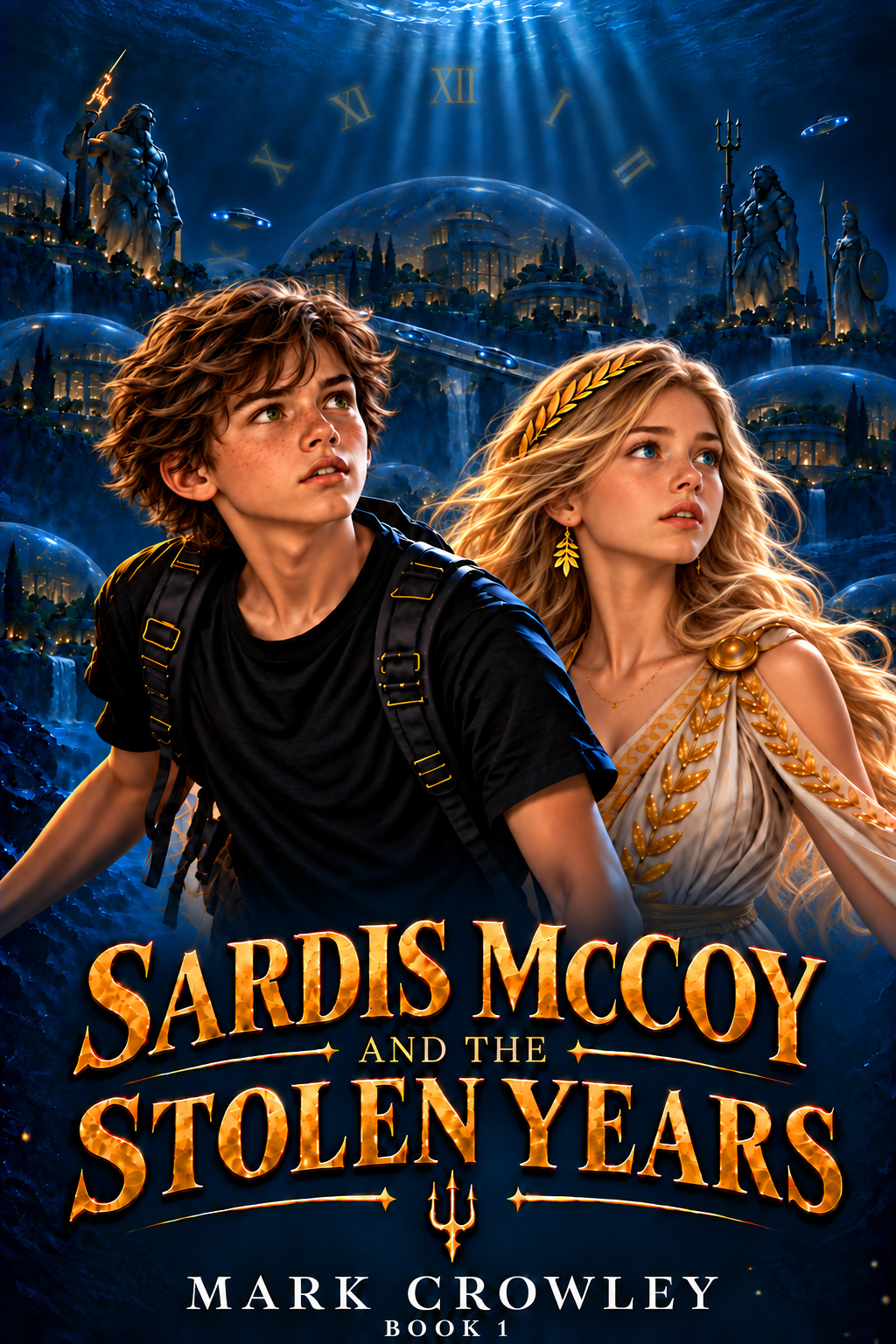
START WITH WHAT IS ON THE PAGE
Genesis, curiosity, and long lives.
At the park, Athena names Methuselah, Noah, and the early generations in Genesis. On the drive to Corpus Christi, she lists five lifespans. Each number matches the biblical account:
| Person | Years | Read the passage |
|---|---|---|
| Adam | 930 | Genesis 5:5 |
| Seth | 912 | Genesis 5:8 |
| Jared | 962 | Genesis 5:20 |
| Methuselah | 969 | Genesis 5:27 |
| Noah | 950 | Genesis 9:29 |
Athena wonders whether Antgeria could be connected, but admits she was not there. Isaiah calls the comparison interesting, rather than proof. The story invites readers to return to the text and distinguish a recorded lifespan from an imagined explanation.
Ask together: What does Genesis actually say, and what has the novelist imagined around it?
Questions can lead to careful reading.
“I expect you to question everything I’m telling you,” Athena says. Her lesson about people understanding different parts of a walrus reinforces humility about incomplete knowledge.
1 Thessalonians 5:19–22 calls for testing prophetic claims and holding on to what is good. Families can use that call to discernment as a lens for Sardis’s questions; the novel does not quote the passage.
Ask together: How can we examine a confident claim without confusing confidence with truth?
A glimpse of leviathans.
While discussing Atlantis’s old defenses, Athena begins to connect accounts of mermaids and leviathans with its hidden history. Samson cuts her off. The word offers a link to the creature imagery in Job 41 and Psalm 104:26. Book One does not identify those defenses as the Bible’s Leviathan.
Ask together: How do the Bible’s descriptions of the sea encourage wonder and humility about creation?
MAJOR ENDING SPOILERSPrayer, sacrificial love, and the years aheadOpen after reading, or if you are a parent previewing the story.
Hope beside the hospital bed.
“Now we wait. And watch. And pray.”Jennifer, as Sardis’s treatment begins
Jennifer’s words place prayer alongside medical care and the family’s fear. Philippians 4:6–7 offers a companion reading about bringing our requests to God. That passage is a suggested reading, not a quotation in the novel.
Ask together: What can prayer look like when we cannot control the outcome?
The courage to care for someone else.
Sardis says he would want to help even if only the boy with the Yankees cap needed saving. His willingness to risk himself gives families a way to discuss Jesus’s teaching about costly love in John 15:13 and loving our neighbor in Mark 12:30–31.
Ask together: How can we put another person’s good first in ordinary, safe choices? Sardis’s medical risk is an exceptional fictional crisis, not something young readers need to imitate.
Jesus, Saint Peter, and questions about death.
After Sardis’s heart restarts, Kale asks whether he saw Jesus or Peter. Isaiah supplies “Saint Peter.” The boys also joke about “the bad place.” Sardis remembers voices and is unsure whether he heard them or dreamed; he does not report a confirmed vision of heaven.
For context, Matthew 16:18–19 connects Peter with the keys of the kingdom. The familiar image of Peter as heaven’s gatekeeper is a cultural tradition; that scene is not described in this passage.
Ask together: Which ideas about heaven come from Scripture, and which come from jokes, pictures, or popular culture?
More years, or a life well lived?
Sardis learns that his slower aging will change the future he expected with his mother and friends. Psalm 90:12 invites readers to think about using their days wisely. The epilogue does not quote this verse, and Antgeria’s extended lifespan is not the same as the Christian promise of eternal life.
Ask together: What would make a day valuable, whether we had seventy years or seven hundred?
Sacrifice, death, and a renewed future.
Mark intended Sardis’s willingness to risk his life for others, his return from the brink of death, and his changed future to echo Christian themes of self-giving love and new life. Jesus’s sacrifice and resurrection inspired that pattern. Sardis’s recovery and slower aging are the story’s imaginative expression of those themes; the Christian promise of eternal life reaches beyond the extended years of this fictional world.
The author also connects the story’s questions about mortality with Adam and Eve’s disobedience, the warning about death in Genesis 2:16–17, and the return to dust and loss of access to the tree of life in Genesis 3:19–24. Paul brings death in Adam and resurrection in Christ together in 1 Corinthians 15:21–22. These are the author’s thematic connections, rather than passages quoted or explained by the novel.
Ask together: What does Sardis’s story help us feel about sacrifice and a second chance? How does the Bible’s promise of life in Christ go further?
A NOTE FOR PARENTS
Faith, fantasy, and the conversation between them.
The novel includes Greek and Norse mythology, advanced technology, and people called “Deities.” Within its fictional world, these are long-lived people whose technology helps explain some myths. The story does not establish Antgeria as the explanation for Genesis or identify the biblical God with Atlantis’s people.
Other religious touches include Kale’s VeggieTales joke in Chapter 5, expressions such as “God help her” and “thank God” in Chapters 4–5, and an “Oh, God” exclamation in Chapter 27. These are cultural references or expressions, rather than additional biblical teaching. A cookbook’s use of “Bible” in the prologue is not a Scripture reference.
A thoughtful adventure companion for Christian families who want to strengthen biblical literacy through shared reading, careful questions, and conversations about love and courage.
BEGIN TOGETHER
Open the adventure.
Keep the conversation going.
Read the free opening chapters, or join the adult launch list for publication news.
Chapter references follow the current 28-chapter Book One manuscript. Scripture links open Bible Gateway’s NIV text in a new tab; families may use their preferred translation. This companion adds no passages to the novel.